STI, Child Protection Committee Pledge Stronger Referral Pathways to Protect Children and Youth with Disabilities
KAPCHORWA – Sabiny Transformation Initiative (STI) has spearheaded the functionalization of Child and Youth Protection Committees across divisions and sub-counties in Kapchorwa Municipality to strengthen referral pathways and improve protection…
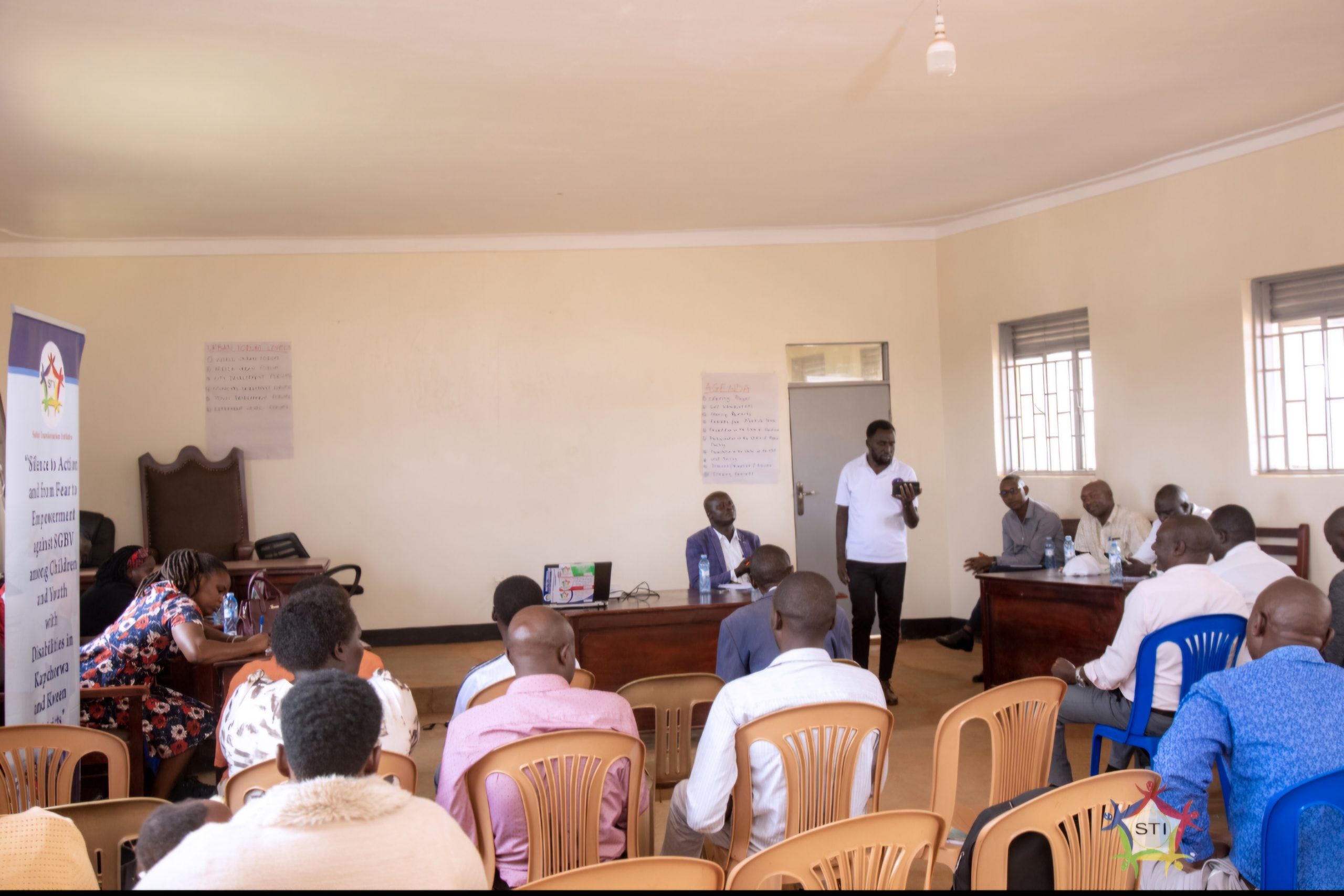
KAPCHORWA – Sabiny Transformation Initiative (STI) has spearheaded the functionalization of Child and Youth Protection Committees across divisions and sub-counties in Kapchorwa Municipality to strengthen referral pathways and improve protection for children and youth with disabilities (CYWDs), who continue to face heightened risks of Sexual and Gender-Based Violence (SGBV).
The committees bring together elected local leaders, Councillors for Persons with Disabilities (PWDs), parents and caregivers, Parish Internal Security Officers, youth with disabilities, religious leaders, Local Council leaders, and senior municipal officials to coordinate prevention, reporting, referral, and follow-up of abuse cases affecting children and youth with disabilities.
Speaking during a training for committee members, STI Project Coordinator Festo Majinjach said the initiative seeks to ensure that children and youth with disabilities enjoy equal rights and access to education, healthcare, protection, and other essential services.
He noted that many children and youth with disabilities continue to suffer abuse in silence because existing referral systems are weak and fragmented, making it difficult for survivors to access timely support and justice.
“Many cases of rape, defilement, physical abuse, neglect, and other forms of violence are either never reported or fail to progress through the justice system,” Majinjach said. “As a result, many survivors are denied justice while perpetrators remain within the community”.
He explained that weak coordination among communities, local leaders, police, health facilities, and other service providers often leads to delayed reporting, loss of critical evidence, inadequate case follow-up, and limited access to survivor support services.
Majinjach said the Child and Youth Protection Committees will strengthen community referral pathways by identifying survivors early, linking them to police, health, legal, and psychosocial services, and following up on cases to ensure appropriate action is taken.”The committees will also operationalize the Sauti Hotline 116 as a community-based reporting mechanism to encourage timely reporting of abuse and improve response for children and youth with disabilities,” he added.
STI Executive Director Priscilla Kusuro called upon division and sub-county local councils to champion disability inclusion by advocating for schools that are accessible to all learners, regardless of their abilities. She urged local governments to promote reasonable accommodation in schools through the construction of disability-friendly infrastructure, including ramps, accessible classrooms, and toilet facilities designed to meet the needs of children and youth with different disabilities.
Kusuro further challenged local councils to enact by-laws that strengthen the protection of children and youth with disabilities from violence, discrimination, neglect, and exploitation. She also appealed to councils to allocate adequate budgetary resources towards disability inclusion, child protection, and the implementation of community-based safeguarding interventions.
“Protection goes beyond responding to abuse. It requires deliberate investment in inclusive education, accessible public facilities, and local policies that safeguard the rights and dignity of children and youth with disabilities,” she said.
The intervention is being implemented under the Uganda National Action on Physical Disability (UNAPD)-led project, “From Silence to Action and from Fear to Empowerment against Sexual and Gender-Based Violence among Children and Youth with Disabilities in Eastern Uganda.
According to STI, community engagements have revealed that although reporting mechanisms such as the Sauti Hotline 116 exist, awareness and utilization remain low among children with disabilities and their caregivers. Weak referral linkages have further hindered access to justice, with many cases either going unreported or failing to progress through the justice system.
Meanwhile, West Division LC III Chairperson Philip Chebet pledged to establish a Child Protection Committee in West Division to strengthen community efforts aimed at safeguarding children and youth with disabilities. Chebet also committed to ensuring that the division allocates a dedicated budget for programmes supporting children and youth with disabilities, noting that disability inclusion formed part of his campaign commitments before he was elected into office.
He further pledged to build partnerships with development partners, civil society organizations, and non-governmental organizations to mobilize additional resources and expand opportunities that will enable children and youth with disabilities to live dignified and fulfilling lives.
Central Division LC III Chairperson Amiri David equally committed to prioritizing disability inclusion by setting aside a budget for children and youth with disabilities in the next financial year.He pledged to ensure that children and youth with disabilities benefit from all government programmes, including the Parish Development Model (PDM), saying no youth should be left behind because of disability.
David also appealed to Sabiny Transformation Initiative to extend similar capacity-building trainings to parish and village levels so that grassroots leaders, caregivers, and community members are better equipped to identify, prevent, report, and respond to cases of abuse involving children and youth with disabilities.
He said strengthening community knowledge at the grassroots would enhance early reporting of Sexual and Gender-Based Violence cases and improve referral and protection mechanisms for survivors.
Barteka Sam, CDO Central Division, stated that they will work closely with local enforcement committees to ensure that children are protected from harm. He further noted that solar-powered security lights have been installed to help deter rape and other criminal activities within the community.
The newly functionalized Child and Youth Protection Committees are expected to serve as the first point of contact for prevention, early identification, referral, and follow-up of SGBV cases. By strengthening coordination among communities, police, health facilities, local governments, and other duty bearers, the committees aim to improve access to justice, survivor support services, and long-term protection for children and youth with disabilities.
Support Our Work.
Your gift keeps girls in school, empowers women, and ends harmful practices across the Sebei Sub-region.